Project Results
Welcome to the Project Results section of the "Inclusion Alertness" initiative! Here, we proudly present the significant outcomes of our collaborative efforts to support young people with dyspraxia. Our project, powered by a dedicated consortium of partners from Bulgaria, Cyprus, Serbia, and Turkey, has achieved remarkable milestones aimed at enhancing awareness, education, and support for individuals with dyspraxia. Explore the innovative tools, insightful training modules, compelling infographics, and dynamic awareness campaigns that have been developed to foster inclusion and improve the lives of those affected by dyspraxia.
Each result showcased here represents a crucial step towards building a more inclusive and supportive environment for young people with dyspraxia. We invite you to delve into these outcomes, learn from our findings, and join us in our mission to make a meaningful difference in the lives of individuals with dyspraxia.

Inclusion Alertness Toolbox
Results
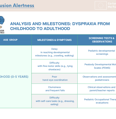
Milestone
Screening Questionnaire Analysis:
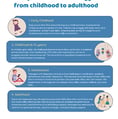
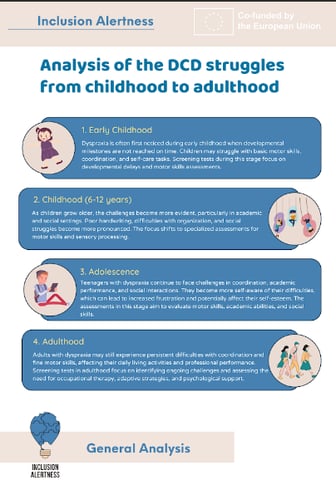
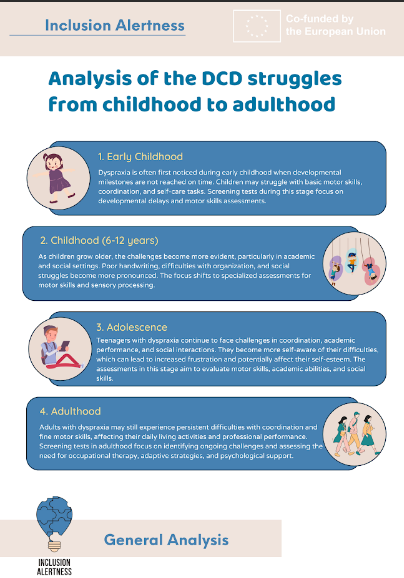
Analysis of DCD Struggles
Inclusion Alertness Toolbox
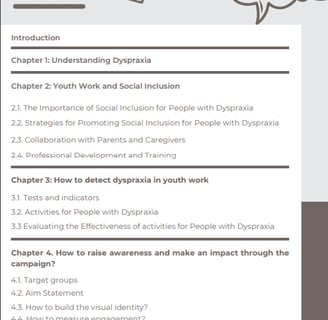
The primary outcome of the Inclusion Alertness project is the development of the "Inclusion Alertness Toolbox," a comprehensive resource designed to empower youth workers, educators, and professionals working with individuals with dyspraxia. This toolbox serves as a centralised hub of knowledge, strategies, and best practices to support the inclusion and well-being of individuals with dyspraxia across various age groups and settings.
Key components of the Inclusion Alertness Toolbox include:
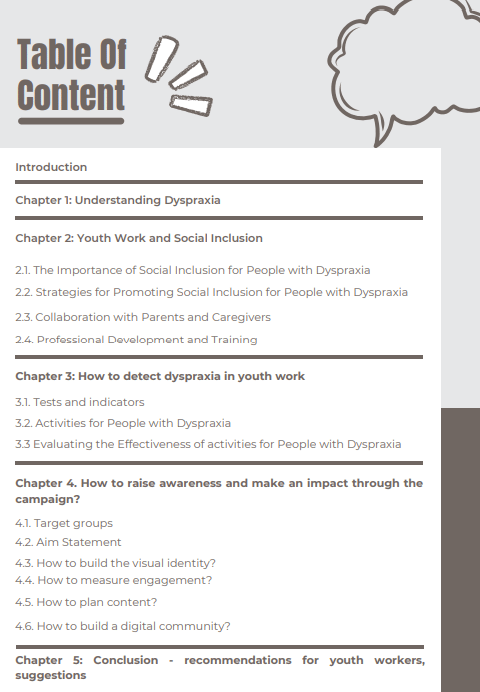
Understanding Dyspraxia: The toolbox provides in-depth information about dyspraxia, its characteristics, and how it affects individuals throughout their lives. It covers the challenges faced by people with dyspraxia in areas such as motor coordination, self-care, social interactions, and academic performance.
Strategies for Social Inclusion: The toolbox offers practical strategies and guidelines for promoting social inclusion and participation for individuals with dyspraxia. It includes tips on creating inclusive environments, adapting activities, and fostering positive social interactions among peers.
Collaboration with Parents and Caregivers: Recognizing the importance of family involvement, the toolbox provides guidance on effective collaboration and communication with parents and caregivers of individuals with dyspraxia. It offers strategies for building partnerships, sharing information, and supporting families in their journey.
Professional Development and Training: The toolbox includes resources and materials for professional development and training of youth workers and educators. It covers topics such as identifying signs of dyspraxia, implementing accommodations, and using evidence-based interventions to support individuals with the condition.
Age-Specific Guidance: The toolbox is organized to provide age-specific guidance, recognizing that the needs and challenges of individuals with dyspraxia may vary across different life stages. It offers tailored strategies and recommendations for supporting individuals in childhood, adolescence, and adulthood.
Practical Tools and Resources: The toolbox includes a wide range of practical tools, such as checklists, assessment forms, activity ideas, and visual aids, to assist youth workers in their daily work with individuals with dyspraxia. These resources are designed to be user-friendly and easily adaptable to different settings and contexts.
The Inclusion Alertness Toolbox is a valuable resource that equips youth workers with the knowledge, skills, and tools necessary to effectively support individuals with dyspraxia. By providing a comprehensive framework for understanding and addressing the unique needs of this population, the toolbox aims to promote inclusion, participation, and well-being for individuals with dyspraxia across various aspects of their lives.
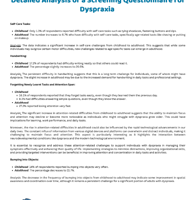
Screening Questionnaire Analysis
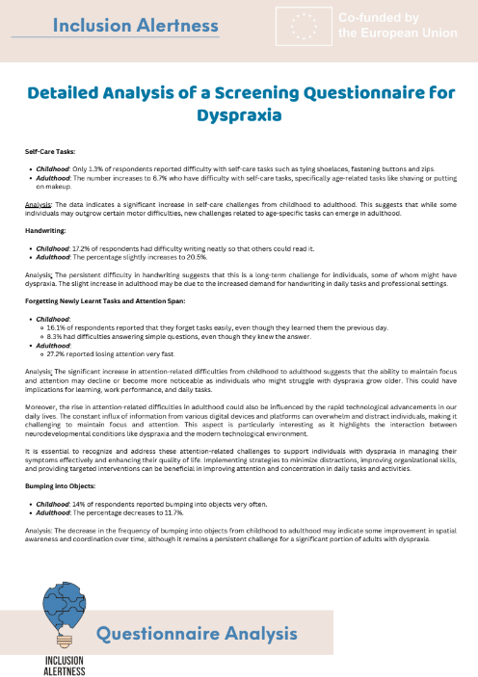
A detailed analysis of a screening questionnaire for dyspraxia was conducted, revealing important insights into the persistent and evolving nature of dyspraxia symptoms from childhood to adulthood. Key findings include:
Significant increase in self-care challenges in adulthood
Persistent handwriting difficulties
Increased attention-related difficulties in adulthood
Improvement in spatial awareness and organizational skills, but ongoing challenges for many adults
Consistent emotional regulation difficulties across age groups
Continued challenges in daily living activities and organizational skills for adults with dyspraxia
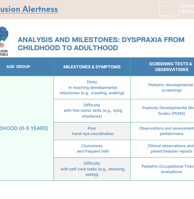
Milestones and Symptoms
A detailed analysis of a screening questionnaire for dyspraxia was conducted, revealing important insights into the persistent and evolving nature of dyspraxia symptoms from childhood to adulthood. Key findings include:
Significant increase in self-care challenges in adulthood
Persistent handwriting difficulties
Increased attention-related difficulties in adulthood
Improvement in spatial awareness and organizational skills, but ongoing challenges for many adults
Consistent emotional regulation difficulties across age groups
Continued challenges in daily living activities and organizational skills for adults with dyspraxia
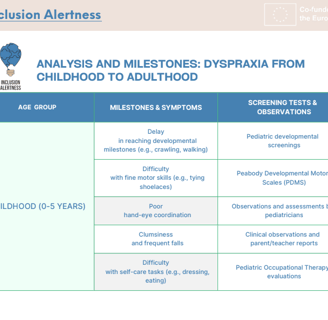
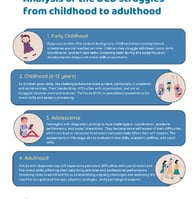
Analysis of DCD Struggles from Childhood to Adulthood
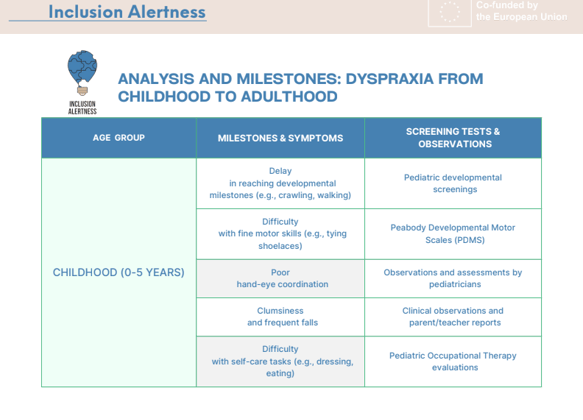
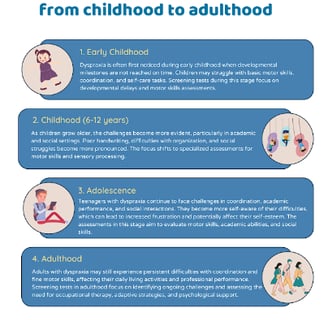
The project conducted a general analysis of the struggles individuals with Developmental Coordination Disorder (DCD), also known as dyspraxia, face from childhood to adulthood. This analysis provides valuable insights into the challenges and experiences of individuals with DCD throughout their lives, helping youth workers better understand and support them.
The European Commission's support for the production of this publication does not constitute an endorsement of the contents, which reflect the views only of the authors, and the Commission cannot be held responsible for any use which may be made of the information contained therein.
DISCLAIMER